
01 / The client
LFMS overview: give every matter an operational home
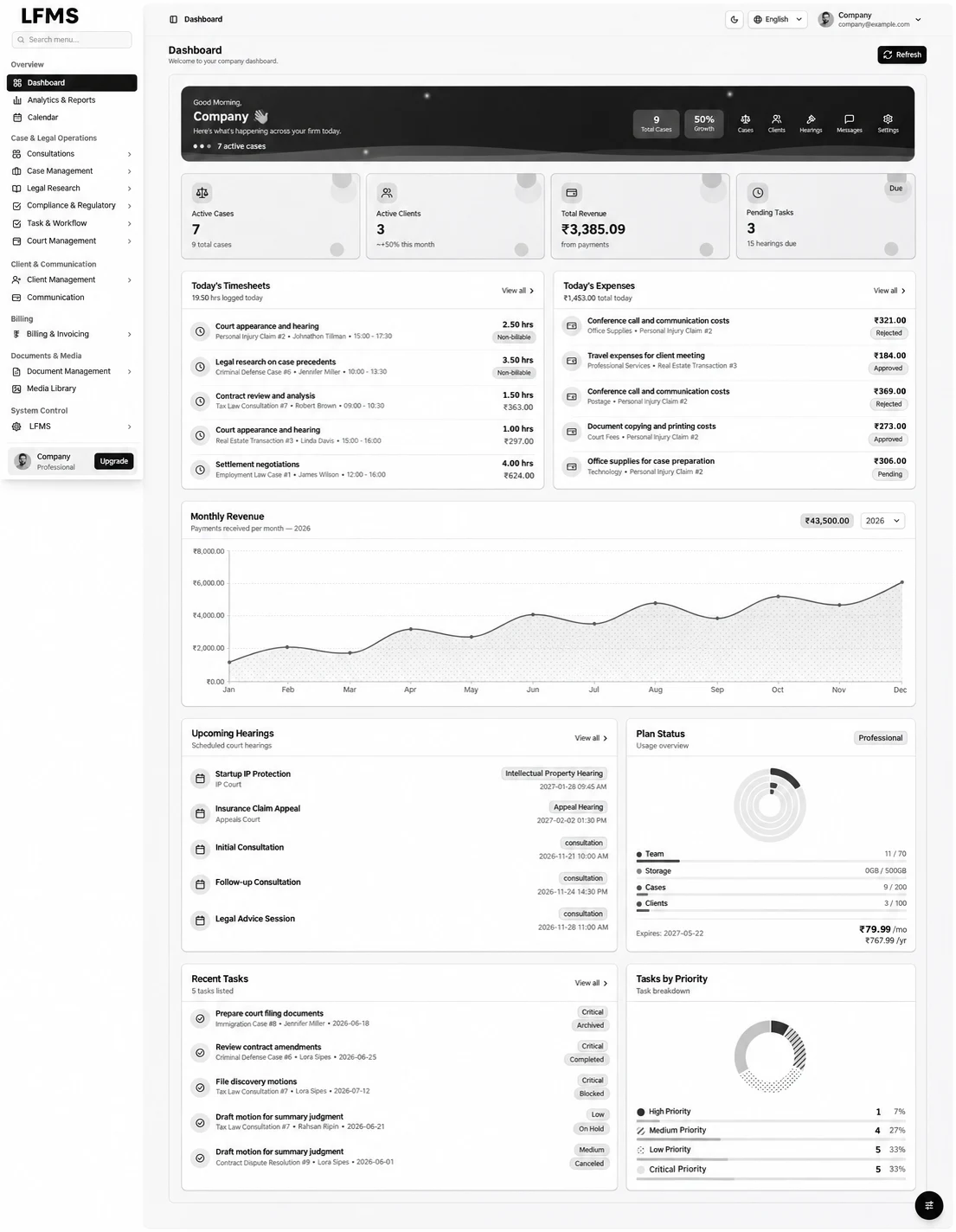
LFMS brings the administrative side of a legal practice into a matter-centred workspace. A consultation, assigned advocate, upcoming hearing, research note and invoice should point to the same client context. This case study follows those relationships through the supplied interface, rather than treating each screen as an isolated feature.
For Ackrolix, legal software development begins with the handovers that cause a team to lose context. We map who accepts a new enquiry, who can change a case record, and which decisions require a partner’s review. Those rules provide a useful starting point for a custom advocate management system.
- Industry
- Professional Services, Enterprise Software
- Services / expertise
- Legal Software Development · Law Firm Management Software · Advocate Management System · Legal Case Management · Custom Software Development
- Project focus
- LFMS business workflows
- Implementation
- Custom architecture proposed around agreed requirements
Planning a similar project? Explore our custom software development services.
02 / The project
Intake that captures the next decision
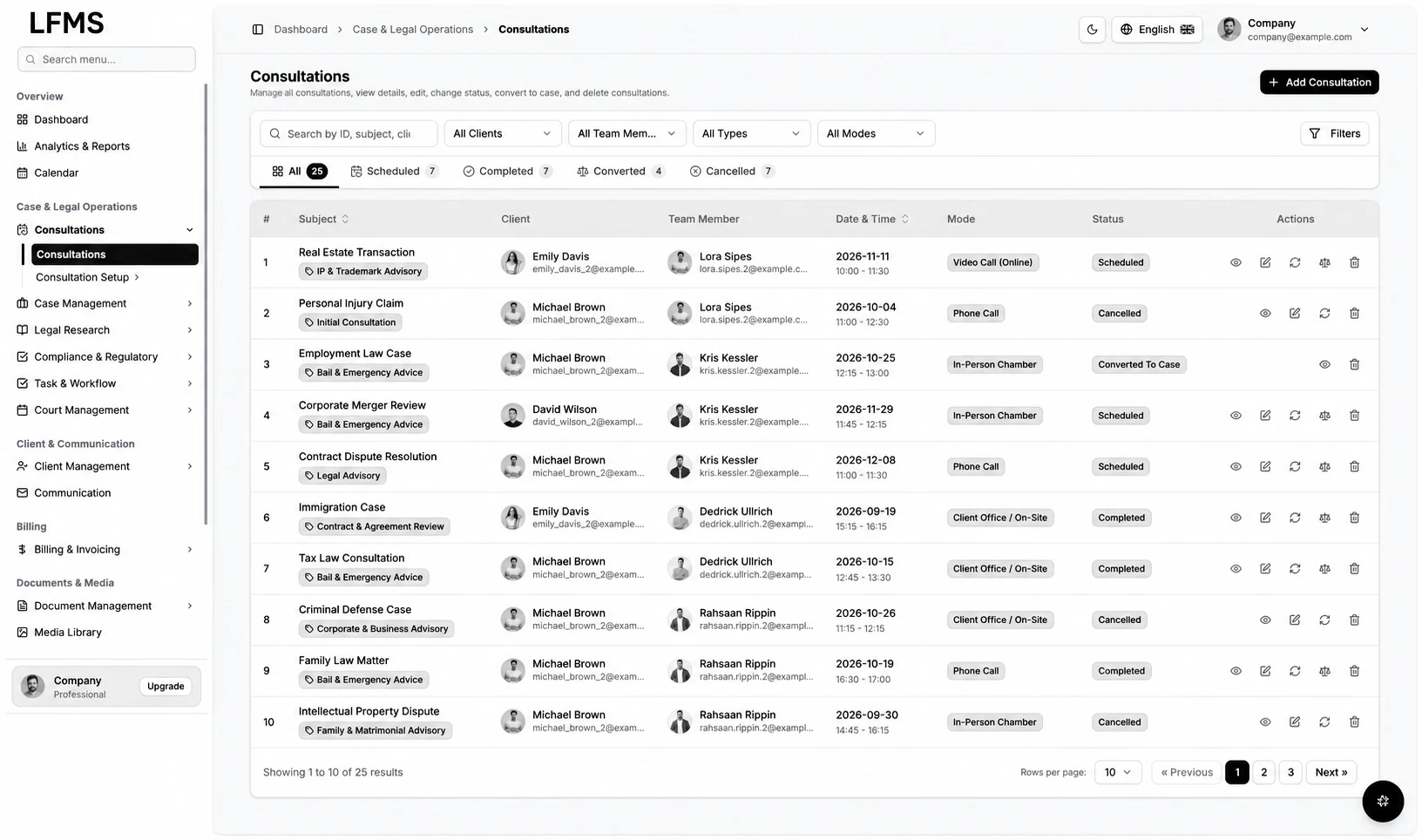
A consultation record needs more than a date in a calendar. Its subject, delivery mode, client, assigned professional and supporting documents establish what the team is preparing for. Configurable consultation types separate an initial assessment from a specialist advisory appointment without forcing the receptionist to use a generic note field.
Ackrolix would validate the intake journey with the people who book and deliver appointments. Required fields, cancellation reasons and the point at which a consultation becomes a case are agreed together. A clear transition avoids duplicate data entry while preserving the original enquiry and appointment history.
03 / The project
Cases, hearings and ownership in one working rhythm
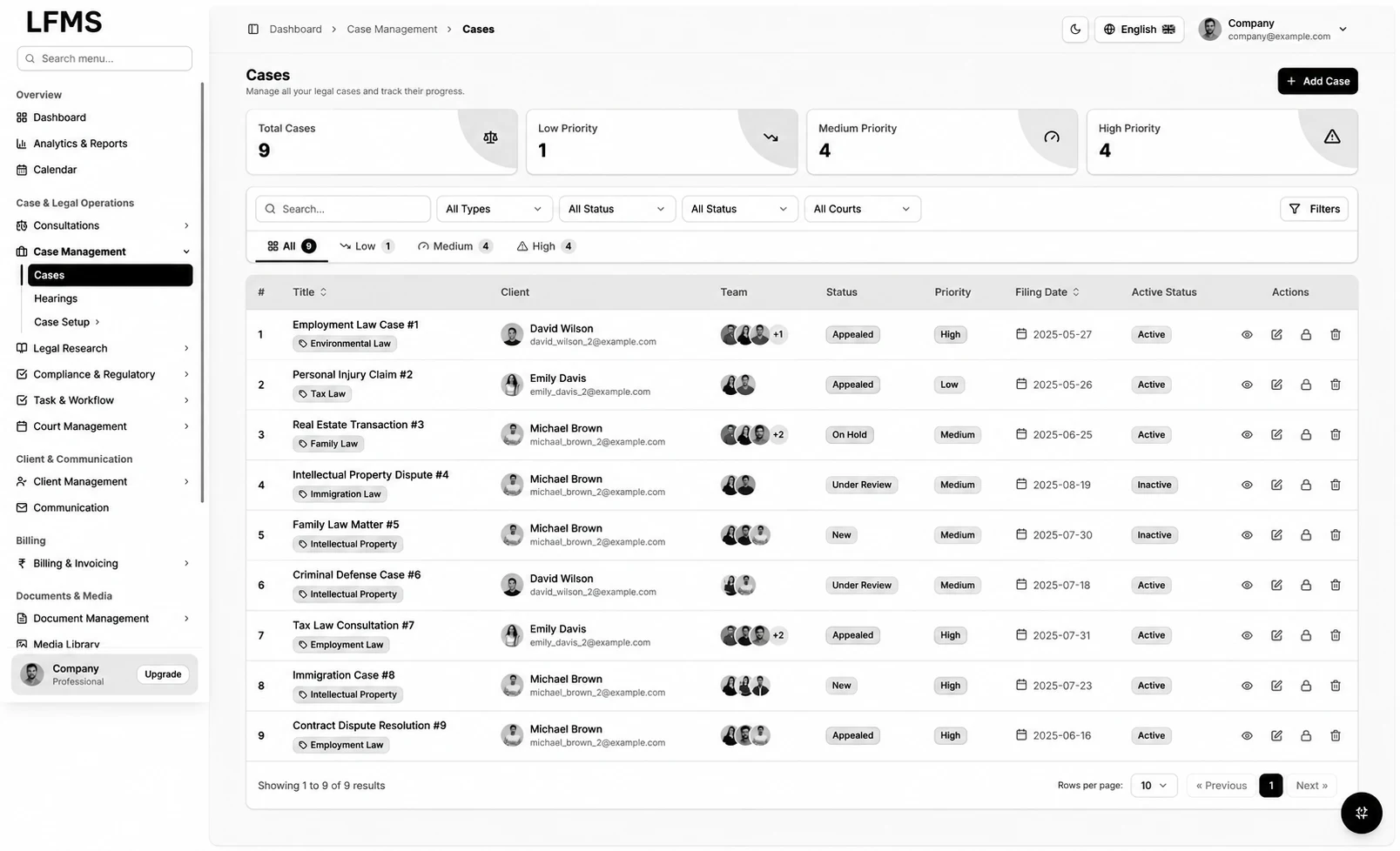
The case register groups matters by status, priority, client and team. Hearing schedules add court references and event states, while task boards make the next action visible. Together these views help administrators coordinate the day without using a separate spreadsheet for every advocate.
We treat permissions and event history as part of the workflow. A hearing date change should have a responsible person, a reason and an agreed notification path. Court names in a register are administrative records; connecting to an external court system would be a separately scoped integration, not an automatic consequence of having a calendar.
04 / The project
Research knowledge that stays attached to its purpose
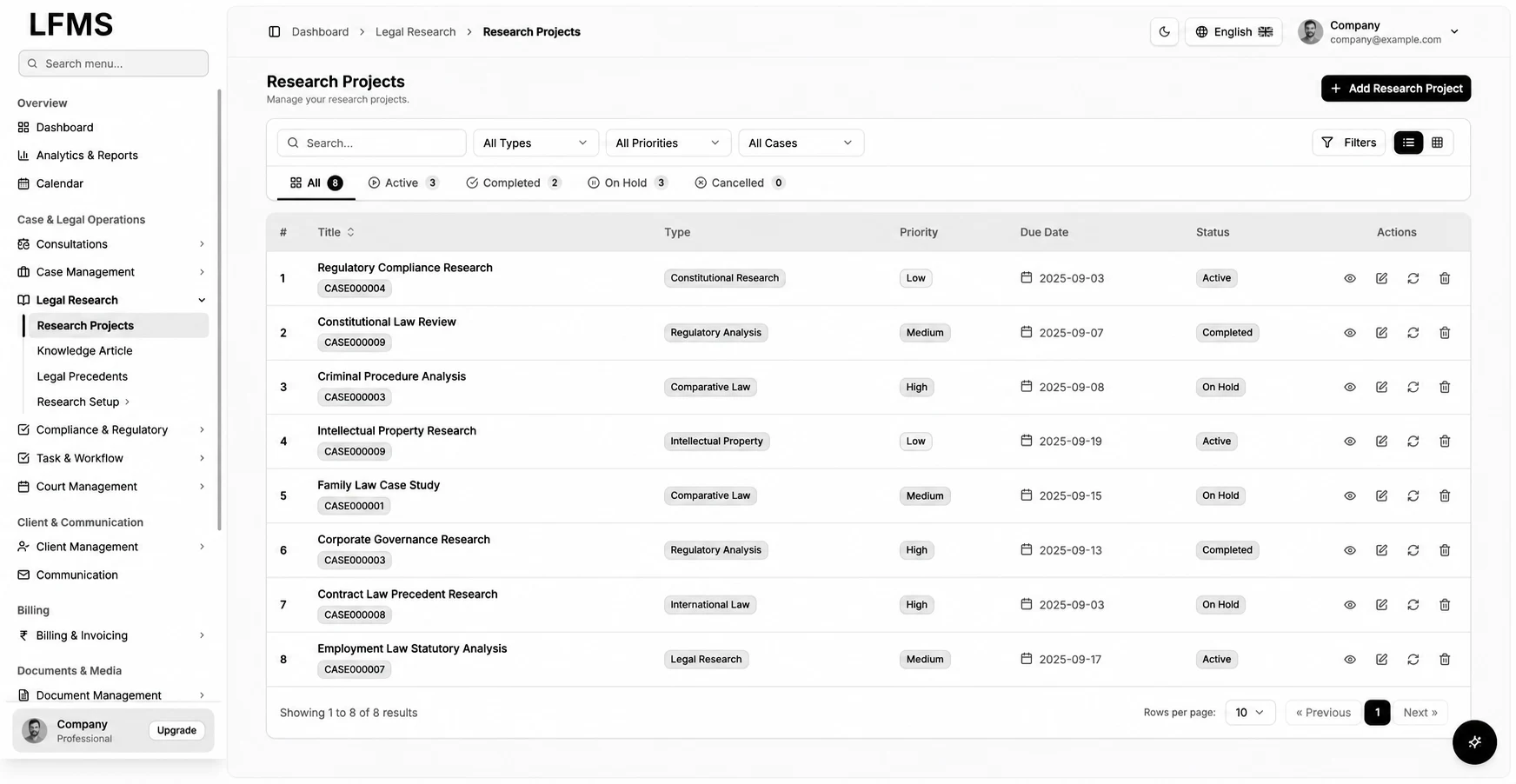
Research projects, citations, precedents and knowledge articles serve different needs. A project records the work on a particular question; the knowledge library holds material the practice may reuse. Maintaining that distinction lets a lawyer follow the reasoning behind a matter without turning every private note into firm-wide reference content.
In an Ackrolix legal application build, document visibility, version history and who can publish a knowledge article would be defined explicitly. Search should respect those permissions. A useful library depends as much on ownership and review routines as on the interface used to browse it.
05 / The project
Compliance administration with accountable reviews
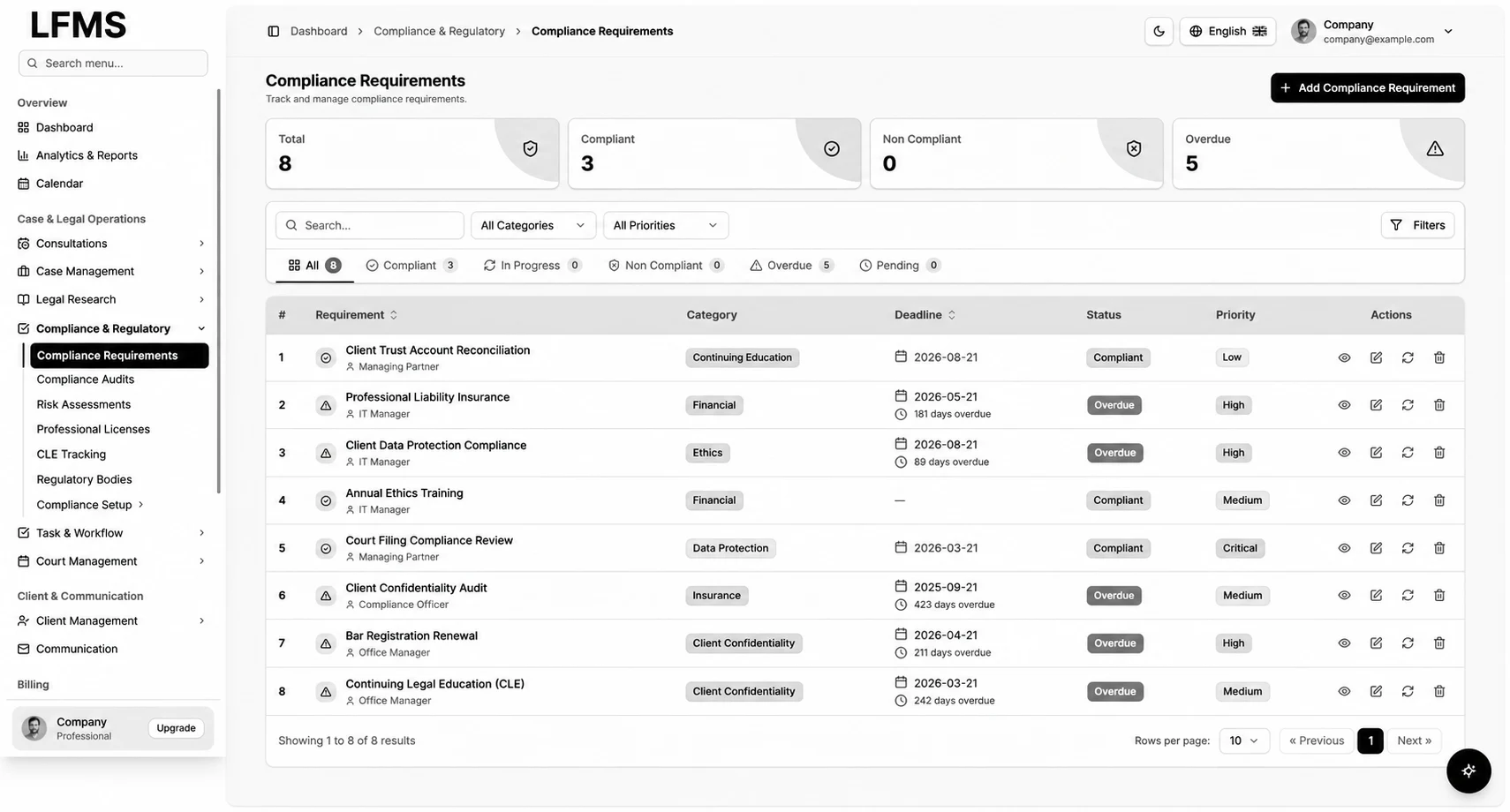
Requirements, audits, risk assessments, professional licences and continuing education records give practice managers a structured review queue. Deadlines and responsible people are more useful than a collection of unrelated reminders. Regulatory contacts provide a maintained reference alongside the work being reviewed.
Ackrolix can model review cycles, evidence attachments and escalation rules around the firm’s agreed procedures. The software records administrative decisions; it does not certify compliance or replace professional judgment. Each practice would confirm applicable obligations and the people authorised to approve or close a review.
06 / The project
From client records to billable activity
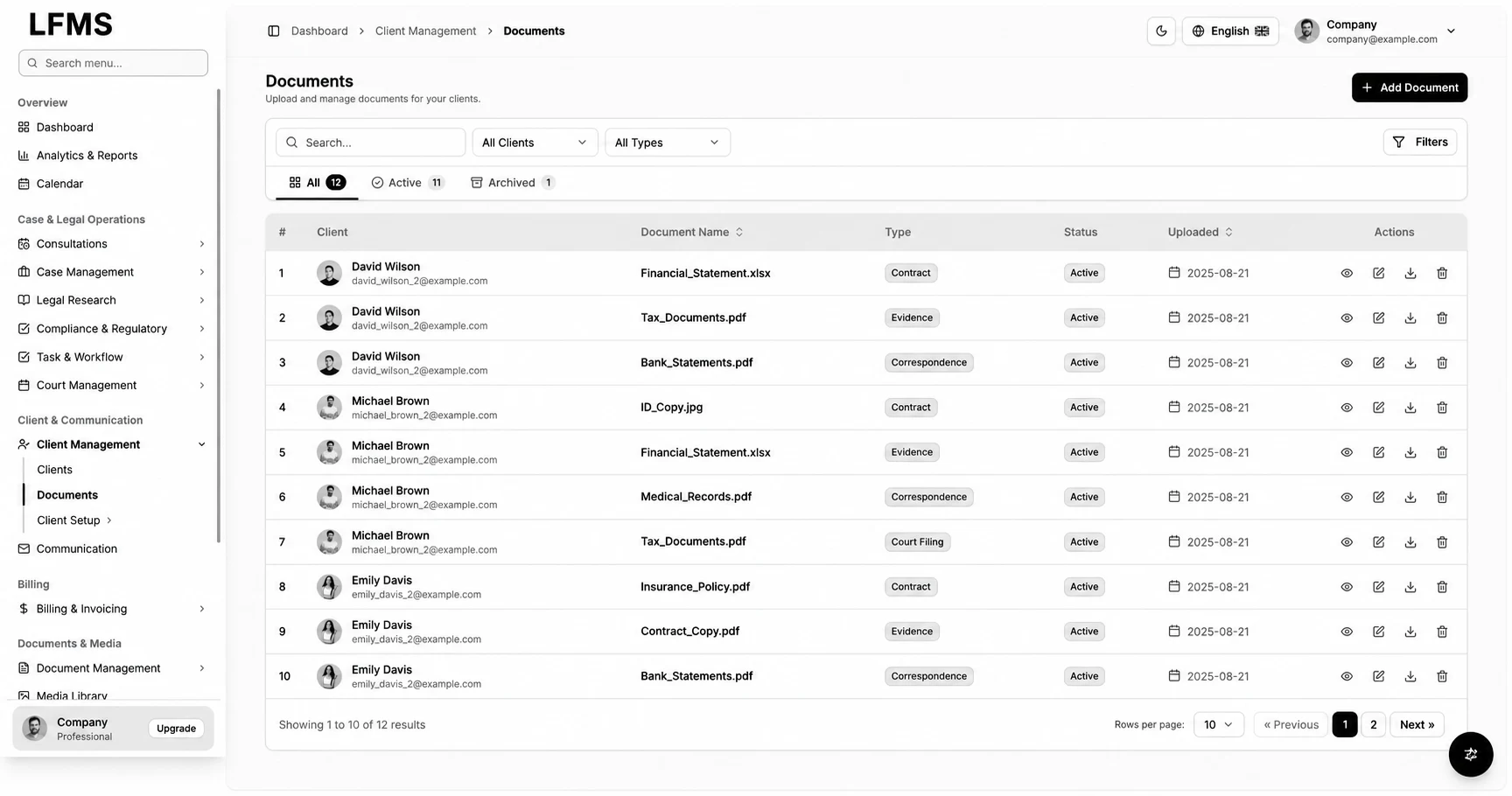
Client documents, time sheets and expenses form the evidence behind an invoice. The screens distinguish recorded work from approved or billable activity and show payment status on the invoice register. That separation matters when a partner needs to review a fee before accounts sends it to the client.
Our discovery process would define billing units, expense categories, approval thresholds and which supporting material can appear on a client-facing document. Corrections should be traceable. Sensitive case information should not be copied into invoice descriptions simply because it is available elsewhere in the application.
07 / The project
Practice visibility and optional platform administration
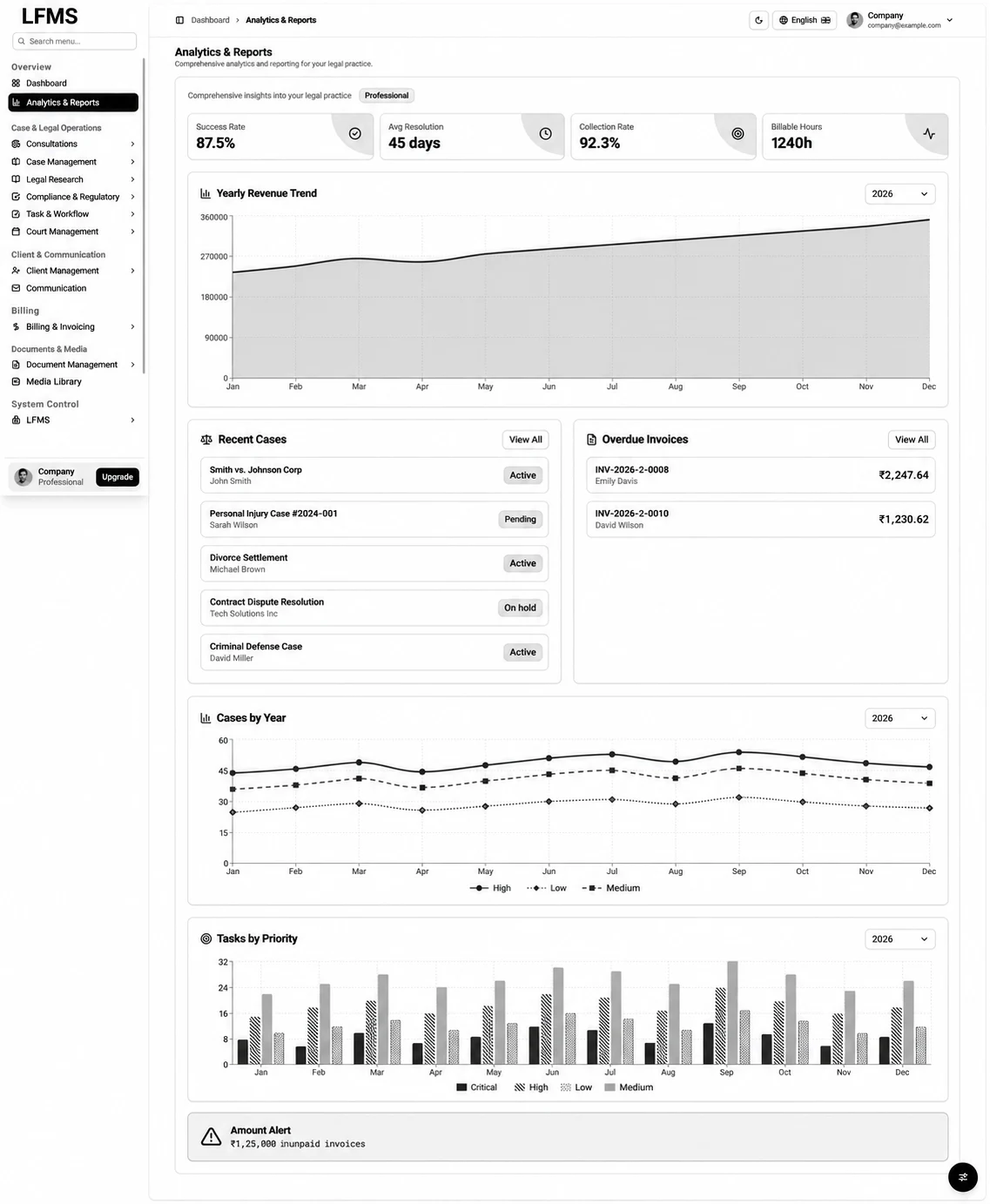
The analytics screen combines workload and financial summaries so managers can ask better operational questions. A useful dashboard must use agreed definitions: what counts as an active matter, an overdue invoice or a completed task? The referral screen illustrates an additional administration area for a platform business model, rather than a mandatory feature for every law firm.
Ackrolix would scope these reporting and platform functions separately from core case management. Demonstration figures in these screens are illustrative; they are not client revenue, collection improvements or evidence of a live law-firm deployment.
08 / The project
An implementation plan built around domain boundaries
Ackrolix can turn the workflow into an implementation plan using React.js for the user interface, Java Spring Boot for business services and PostgreSQL for transactional data. These are proposed technology choices for a custom build, not a claim about the source application behind the supplied screens. We would validate them against existing systems, team skills, hosting constraints and support expectations.
Business capabilities should have clear ownership before they become separate microservices. A modular service can be a sensible starting point when deployment complexity would otherwise outweigh the benefit. API contracts, validation rules and transaction boundaries make future separation easier without imposing distributed infrastructure on every feature.
- Define roles and record-level access with business owners.
- Document REST API contracts, validation and integration failure paths.
- Use background processing for long-running imports and reports.
09 / The project
AWS operations, release controls and a measured scale plan
A production delivery plan needs recovery and observability alongside the feature backlog. Ackrolix would scope AWS infrastructure, database backups, private connectivity and secret management against the agreed operating requirements. Data residency and regional service availability must be checked before choosing a hosting region.
Docker builds and a CI/CD pipeline can provide repeatable releases, with automated checks, database migration review and a rollback procedure. Load testing should use realistic user journeys and report sizes. Monitoring should distinguish an application error from a slow integration or failed background job so the support team has an actionable signal.
- Test backup restoration and agree recovery targets.
- Separate development, review and production credentials.
- Review access logs, operational alerts and deployment approvals.
10 / The project
Start with the workflows your team needs to trust
For a project like LFMS, Ackrolix would begin with a focused discovery covering user roles, existing records and the decisions that need approval. We would prioritise a working vertical slice, review it with the users and agree acceptance criteria before expanding the scope.
Share the journeys that currently depend on repeated data entry or manual follow-up. Our custom software development team can translate those needs into a phased specification, integration plan and support approach. Estimates, delivery milestones and measurable success criteria follow that review rather than an assumed feature count.
- Review source data and migration quality early.
- Validate complete user journeys with the people who operate them.
- Agree training, handover and post-release responsibility.
11 / The project
Planning a similar software project in Gurgaon
For a Gurgaon team, discovery should identify the records shared between a head office, customer-facing staff and operational managers. Ackrolix can review sample imports and approval paths with those teams before defining migration batches and a phased rollout. Training and acceptance checks should reflect the users who will operate the application each day.
Technology used
Questions about this project
Can Ackrolix adapt this workflow to our organisation?
Yes. We first review roles, records, approvals and existing systems, then define the functionality and integrations your team needs.
What is the technology approach?
React.js, Spring Boot, PostgreSQL and AWS are proposed options. Final choices follow discovery; the supplied screens do not verify a production technology stack.
Workflow study based on supplied product interfaces and illustrative records. The original interface sources are ERPGo for CRM, HRMS and AMS, and Advocate SaaS for LFMS; branding has been adapted for presentation. The technical delivery approach is proposed, and no production results are asserted. About the team.


