
01 / The client
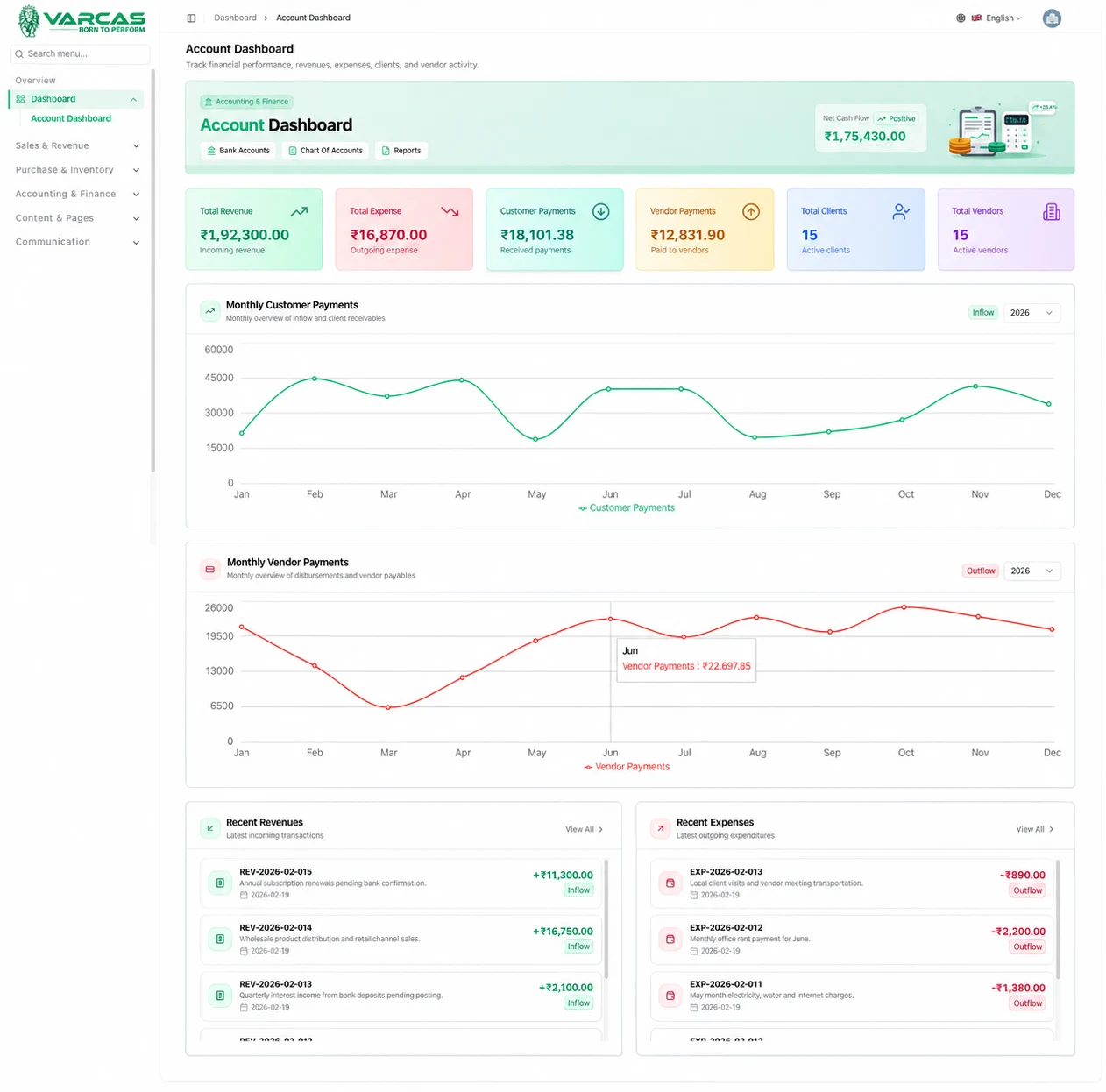
Varcas AMS overview: an account record with business context
Varcas Batteries AMS illustrates how commercial documents, banking activity and accounting review can share a common operational record. The dashboard is an entry point into the underlying transactions, not a substitute for the finance team’s approval process. Ackrolix approaches account management software around the trail from an original business event to a reviewed financial entry.
The supplied interface covers sales documents, master data, receipts, payments, reporting and assets. Our focus in this case study is the relationship between these areas and the decisions a tailored accounting application must make explicit.
- Industry
- Manufacturing, Enterprise Software
- Services / expertise
- Account Management System Development · Accounting Software Development · Billing Software · Financial Software · Asset Management
- Project focus
- Varcas Batteries business workflows
- Implementation
- Custom architecture proposed around agreed requirements
Planning a similar project? Explore our ERP solutions and development and custom software development services for manufacturing projects.
02 / The project
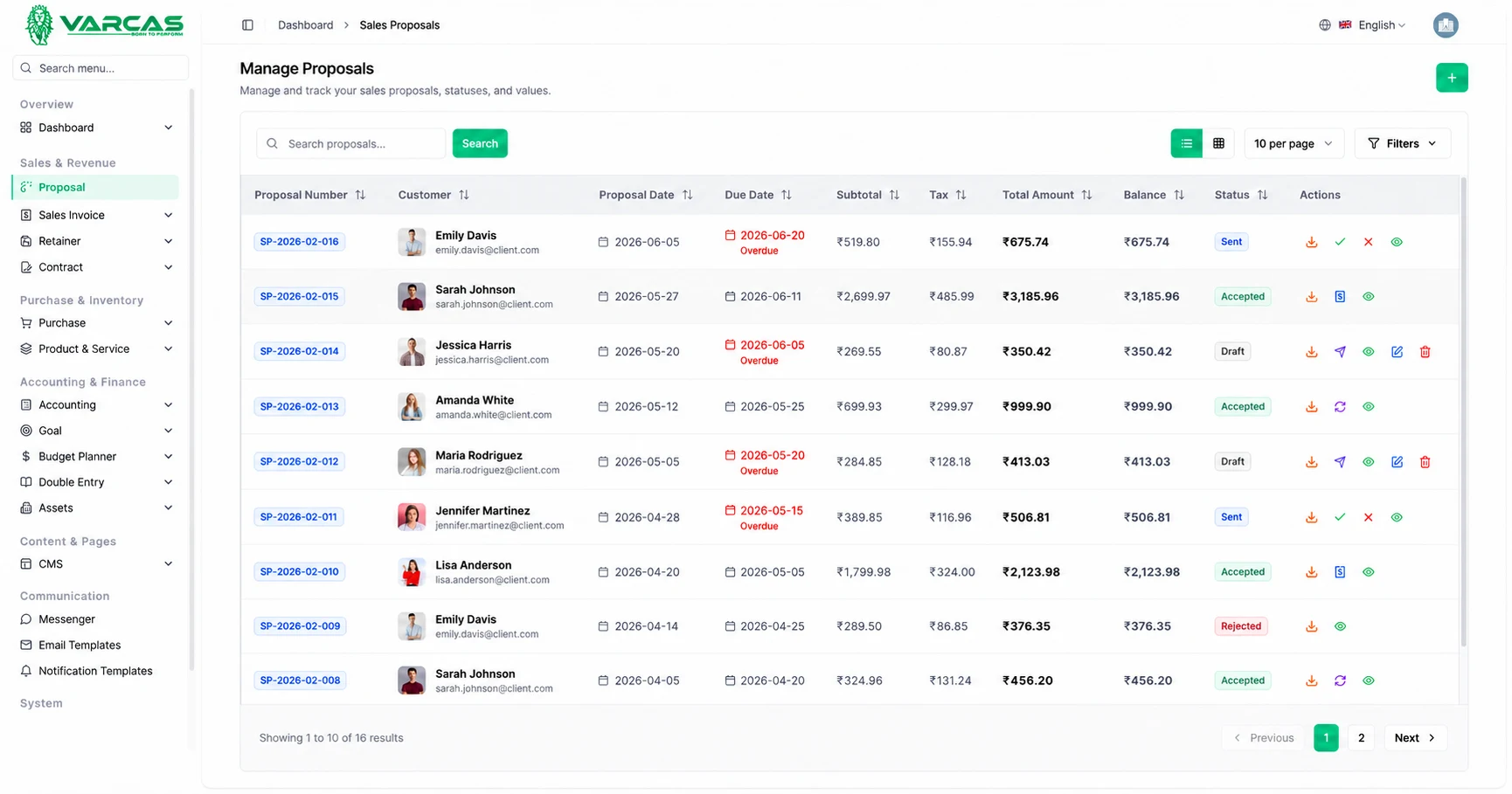
Commercial documents before and after the invoice
Proposals and invoices carry customer, item, price and document-state information through the sales process. Returns and credit notes handle changes after the original transaction. Retainers add another relationship: money received in advance needs a clear allocation rather than being confused with an invoice settlement.
For an Ackrolix AMS engagement, finance and sales stakeholders would agree document numbering, approval responsibility and the conditions under which a document can be revised. A return should reference its original transaction. An advance should retain its allocation history so users can explain a balance without reconstructing it from emails.
03 / The project
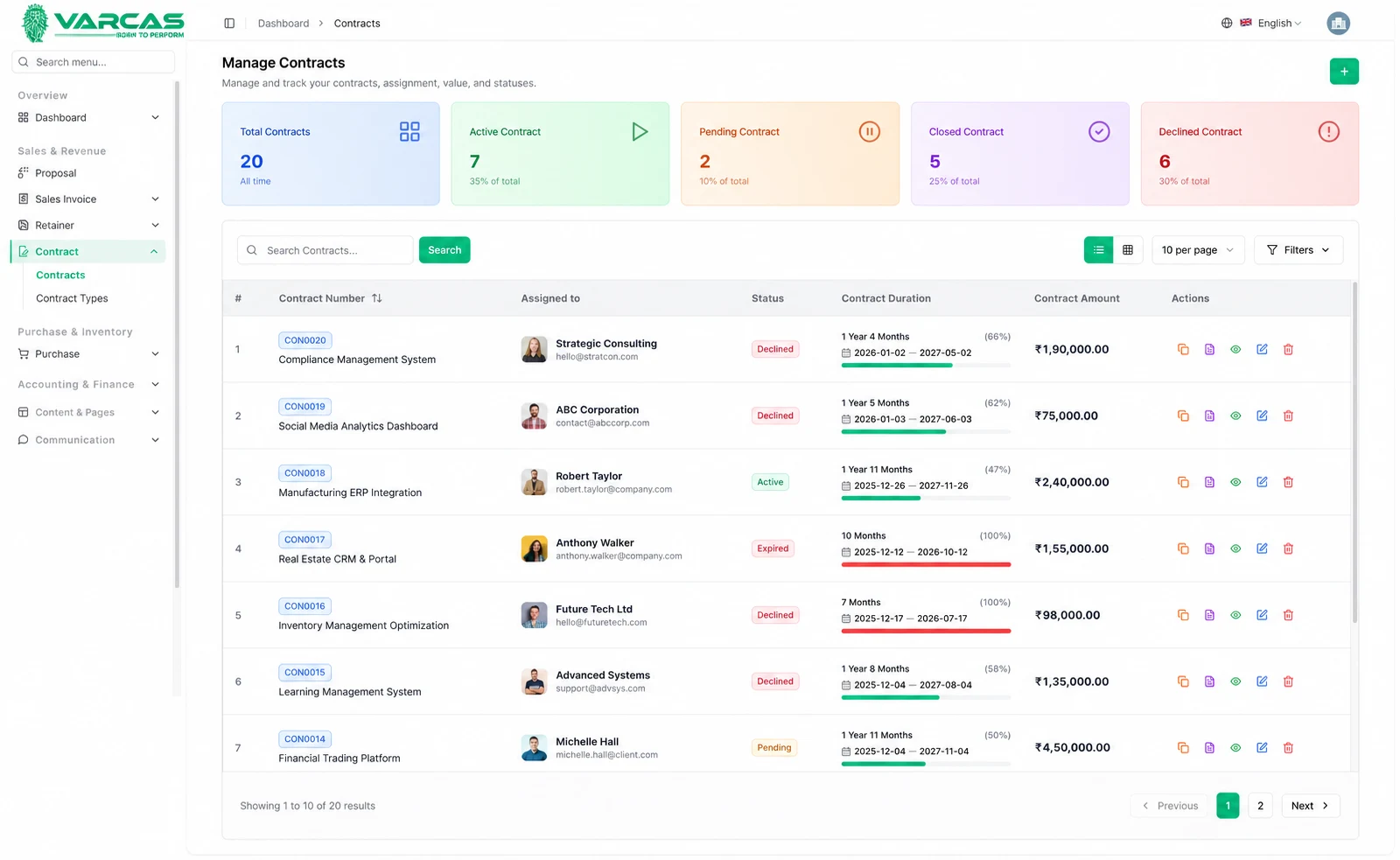
Contracts and counterparties as maintained records
Contracts give an account team a place to review terms, dates, signatures and renewals. Customer and vendor masters establish the shared identities behind those records. Changing a counterparty should not silently rewrite the historical meaning of already issued commercial documents.
Ackrolix can define required master-data fields, duplicate checks and controlled editing around the team’s operating model. Supplier onboarding and customer account maintenance may have different approval paths. The goal is a dependable reference for downstream entries, with visibility restricted according to each user’s responsibility.
04 / The project
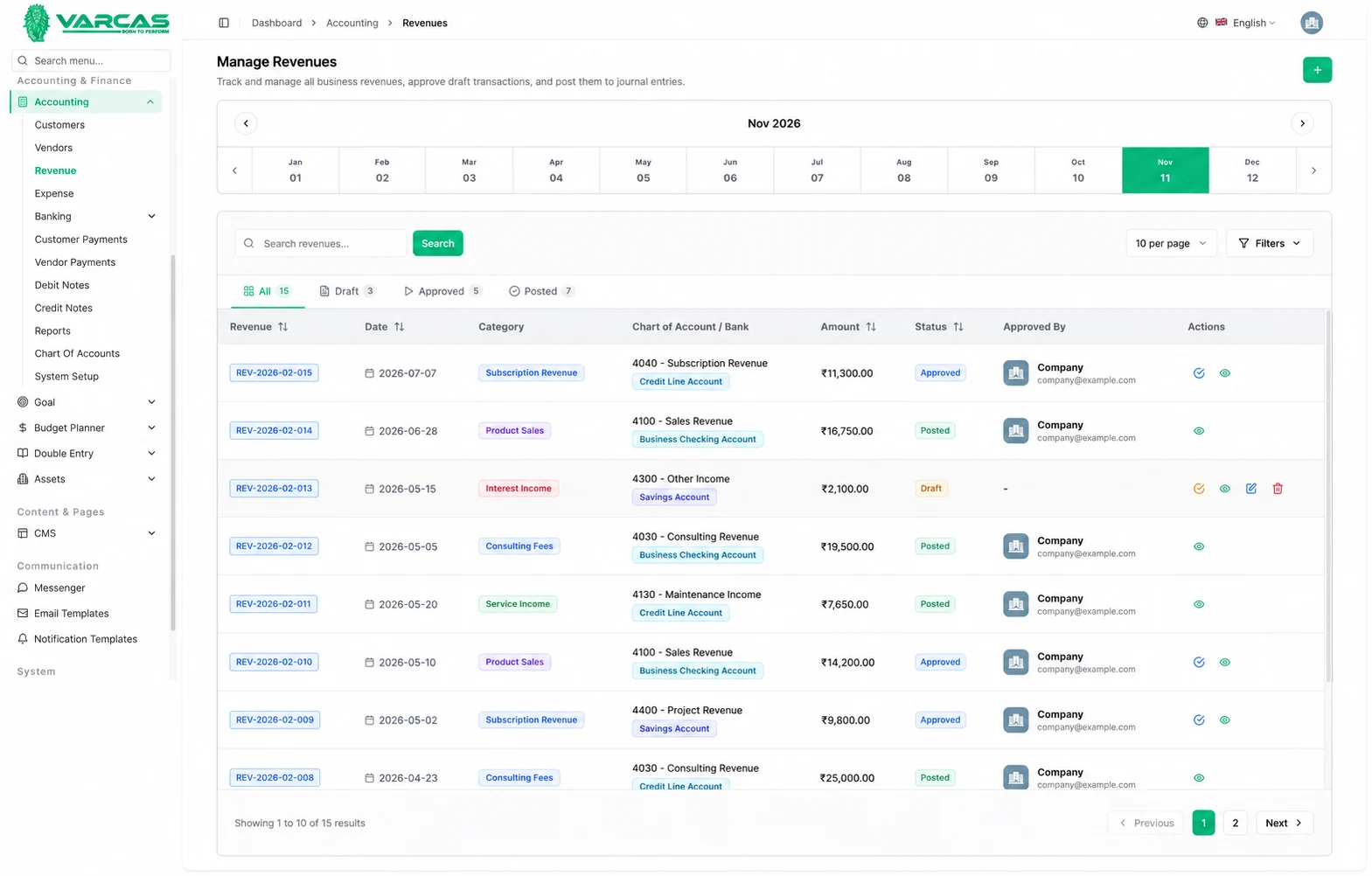
Cash movement that can be reconciled
Revenue, expenses, bank accounts, transfers, customer receipts and vendor payments describe different sides of cash movement. Keeping them linked helps reviewers distinguish an operational payment from a journal adjustment. Debit notes and payment states need an identifiable source and owner when a balance is questioned.
We would agree reconciliation routines before building an external bank connection. Matching rules, duplicate imports, failed payments and corrections all need a defined route back to the underlying record. Listing bank accounts in the interface does not establish that a live bank-feed integration is already in place.
05 / The project
Ledger review and management reporting
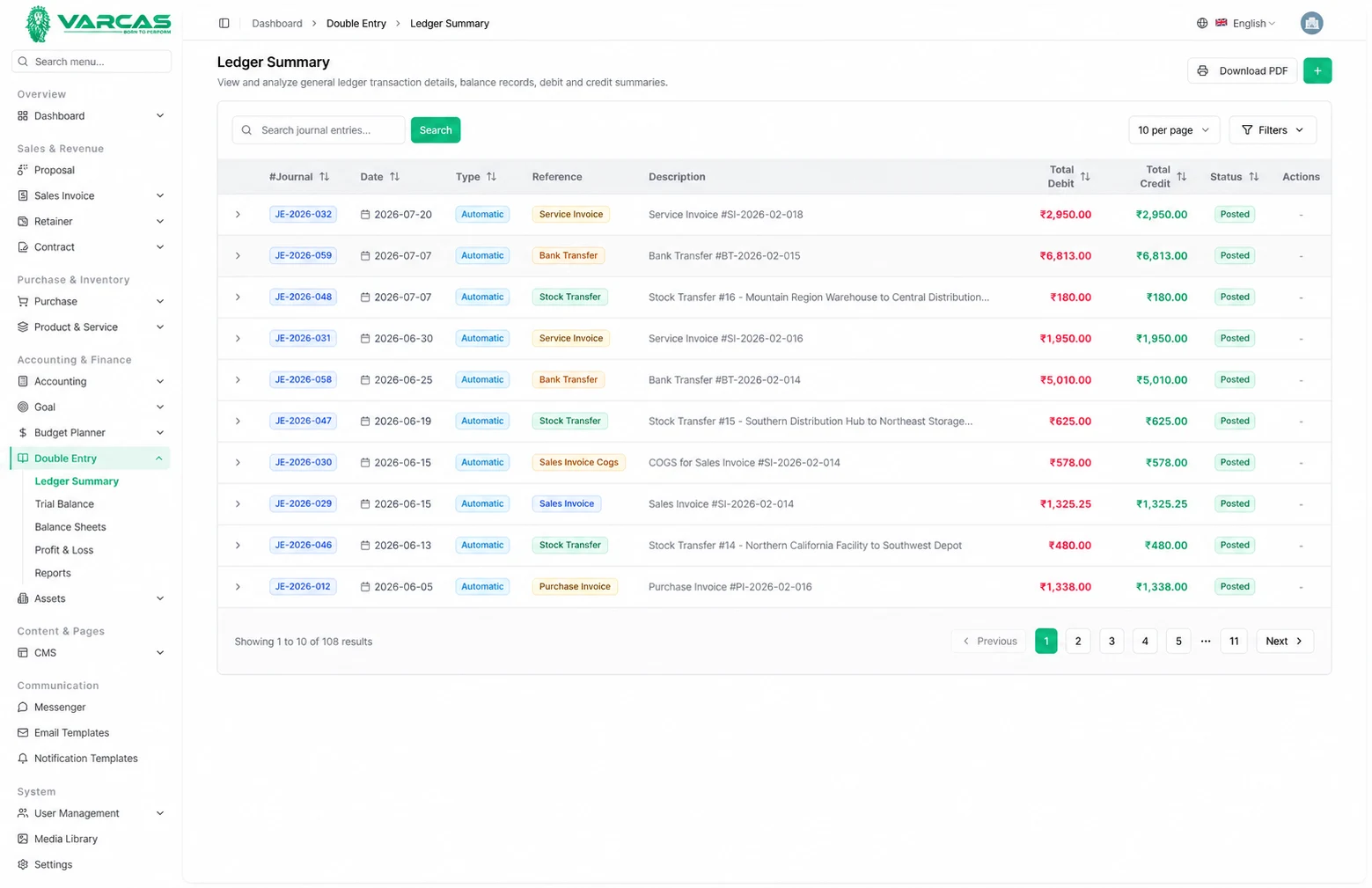
Double-entry records and the trial balance provide a basis for reviewing postings. Balance-sheet and profit-and-loss views then organise those records into financial reports. A useful report needs a stated date range, account classification and treatment of draft or reversed entries.
Ackrolix’s accounting software development process would include sample-period reconciliation with the finance owner. The team should be able to trace a report total back to contributing transactions. Tax treatment, statutory formats and posting policies would be validated for the business; demonstration screens do not establish a certified accounting or tax product.
06 / The project
Budgets and goals with visible accountability
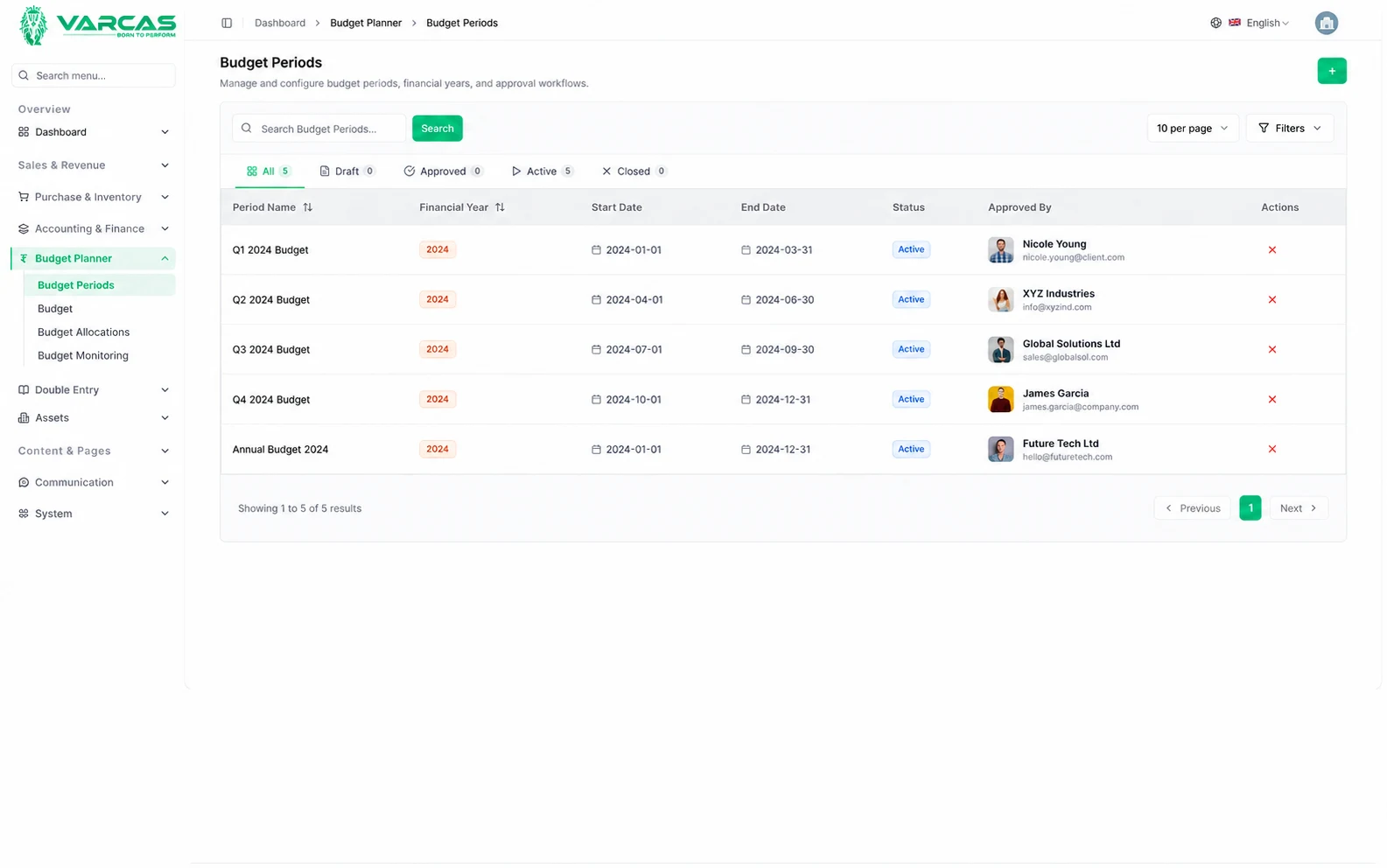
Budget periods and allocations show how a planned amount is assigned and reviewed over time. Goals and milestones add an operational perspective to the same planning conversation. The important relationship is between the approved plan, the responsible team and the evidence used to report progress.
We would define whether actuals are calculated from posted transactions, approved expenditure or another agreed source. Mixing those definitions can make a dashboard look complete while producing conflicting answers. Review states, period locking and correction rules belong in the specification alongside the charts.
07 / The project
Assets, maintenance and controlled access
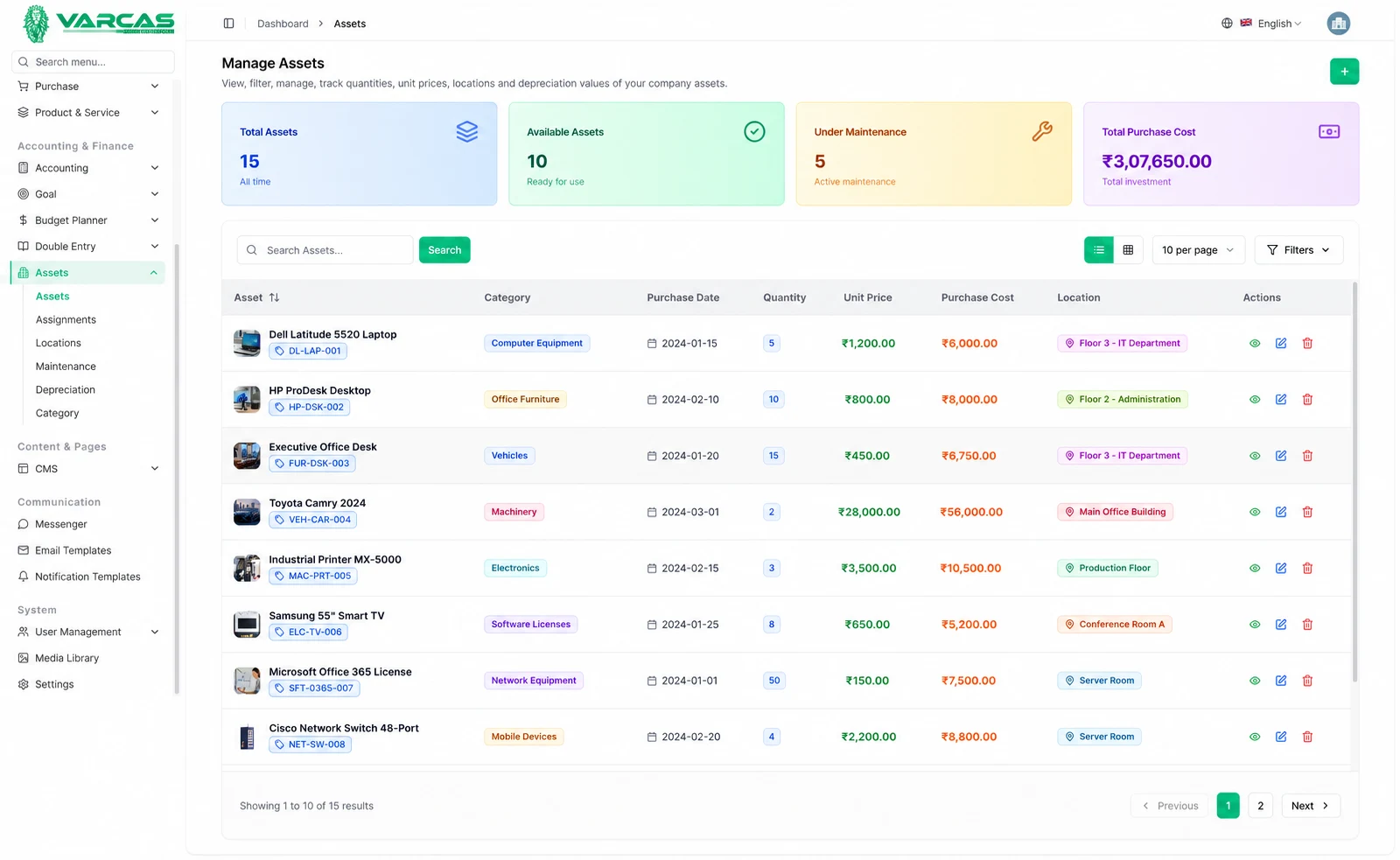
The asset register connects assignments, locations, maintenance and depreciation to a maintained record. This supports a different workflow from sales or banking, even when all three appear inside an AMS. User management then determines who can see costs, approve a payment or change an asset’s status.
Ackrolix would separate accounting permissions from everyday operational access and document the actions requiring elevated approval. An asset’s retirement should preserve its history. Demonstration values are not reported Varcas business results, and the illustrated depreciation fields do not replace an agreed accounting policy.
08 / The project
An implementation plan built around domain boundaries
Ackrolix can turn the workflow into an implementation plan using React.js for the user interface, Java Spring Boot for business services and PostgreSQL for transactional data. These are proposed technology choices for a custom build, not a claim about the source application behind the supplied screens. We would validate them against existing systems, team skills, hosting constraints and support expectations.
Business capabilities should have clear ownership before they become separate microservices. A modular service can be a sensible starting point when deployment complexity would otherwise outweigh the benefit. API contracts, validation rules and transaction boundaries make future separation easier without imposing distributed infrastructure on every feature.
- Define roles and record-level access with business owners.
- Document REST API contracts, validation and integration failure paths.
- Use background processing for long-running imports and reports.
09 / The project
AWS operations, release controls and a measured scale plan
A production delivery plan needs recovery and observability alongside the feature backlog. Ackrolix would scope AWS infrastructure, database backups, private connectivity and secret management against the agreed operating requirements. Data residency and regional service availability must be checked before choosing a hosting region.
Docker builds and a CI/CD pipeline can provide repeatable releases, with automated checks, database migration review and a rollback procedure. Load testing should use realistic user journeys and report sizes. Monitoring should distinguish an application error from a slow integration or failed background job so the support team has an actionable signal.
- Test backup restoration and agree recovery targets.
- Separate development, review and production credentials.
- Review access logs, operational alerts and deployment approvals.
10 / The project
Start with the workflows your team needs to trust
For a project like Varcas Batteries, Ackrolix would begin with a focused discovery covering user roles, existing records and the decisions that need approval. We would prioritise a working vertical slice, review it with the users and agree acceptance criteria before expanding the scope.
Share the journeys that currently depend on repeated data entry or manual follow-up. Our custom software development team can translate those needs into a phased specification, integration plan and support approach. Estimates, delivery milestones and measurable success criteria follow that review rather than an assumed feature count.
- Review source data and migration quality early.
- Validate complete user journeys with the people who operate them.
- Agree training, handover and post-release responsibility.
11 / The project
Planning a similar software project in Dubai
For a Dubai business serving the UAE, discovery should capture language and timezone expectations, organisation boundaries and the systems already used by local operations. Hosting-region availability, data location and access for distributed staff need an explicit decision. Ackrolix can scope these requirements without assuming that every international feature belongs in the first release.
Technology used
Questions about this project
Can Ackrolix adapt this workflow to our organisation?
Yes. We first review roles, records, approvals and existing systems, then define the functionality and integrations your team needs.
What is the technology approach?
React.js, Spring Boot, PostgreSQL and AWS are proposed options. Final choices follow discovery; the supplied screens do not verify a production technology stack.
Workflow study based on supplied product interfaces and illustrative records. The original interface sources are ERPGo for CRM, HRMS and AMS, and Advocate SaaS for LFMS; branding has been adapted for presentation. The technical delivery approach is proposed, and no production results are asserted. About the team.


