01 / The client
About Sutra Clothing
Sutra Clothing sells traditional Indian wear and handloom clothing online. Its live store covers sarees, blouses, kurta sets, co-ord sets, dresses, tops, dupattas, bottoms and dress material, with collections built around festive seasons and textile techniques such as Jamdani weaving and hand block printing.
Ackrolix's portfolio lists Sutra Clothing as a clothing eCommerce store for traditional wear and handlooms, built on Shopify. For a brand like this, the store has to do two things at once: make a broad clothing range easy to browse, and give the craft behind each piece room to be seen.
- Industry
- E-commerce & On-Demand
- Services / expertise
- Shopify eCommerce · Traditional wear and handlooms · Shopify
- Client
- Sutra Clothing
- Industry
- Traditional wear and handlooms
- Service
- Shopify clothing eCommerce store
- Platform
- Shopify
- Client website
- Visit Sutra Clothing ↗
02 / The project
What Ackrolix delivered
The engagement is recorded as Shopify eCommerce for traditional wears and handlooms. Shopify provides the hosted storefront, catalog, cart and checkout, and its collections make it straightforward to group the same garments by product type, by festive edit and by craft.
The live store is organized around that idea:
- A main menu by garment type, from sarees and blouses to dress material.
- Seasonal edits presented as large image tiles.
- Product rows grouped by textile technique, each with a View All link.
- Editorial sections that describe the craft between product rows.
03 / The project
A festive homepage with clear navigation
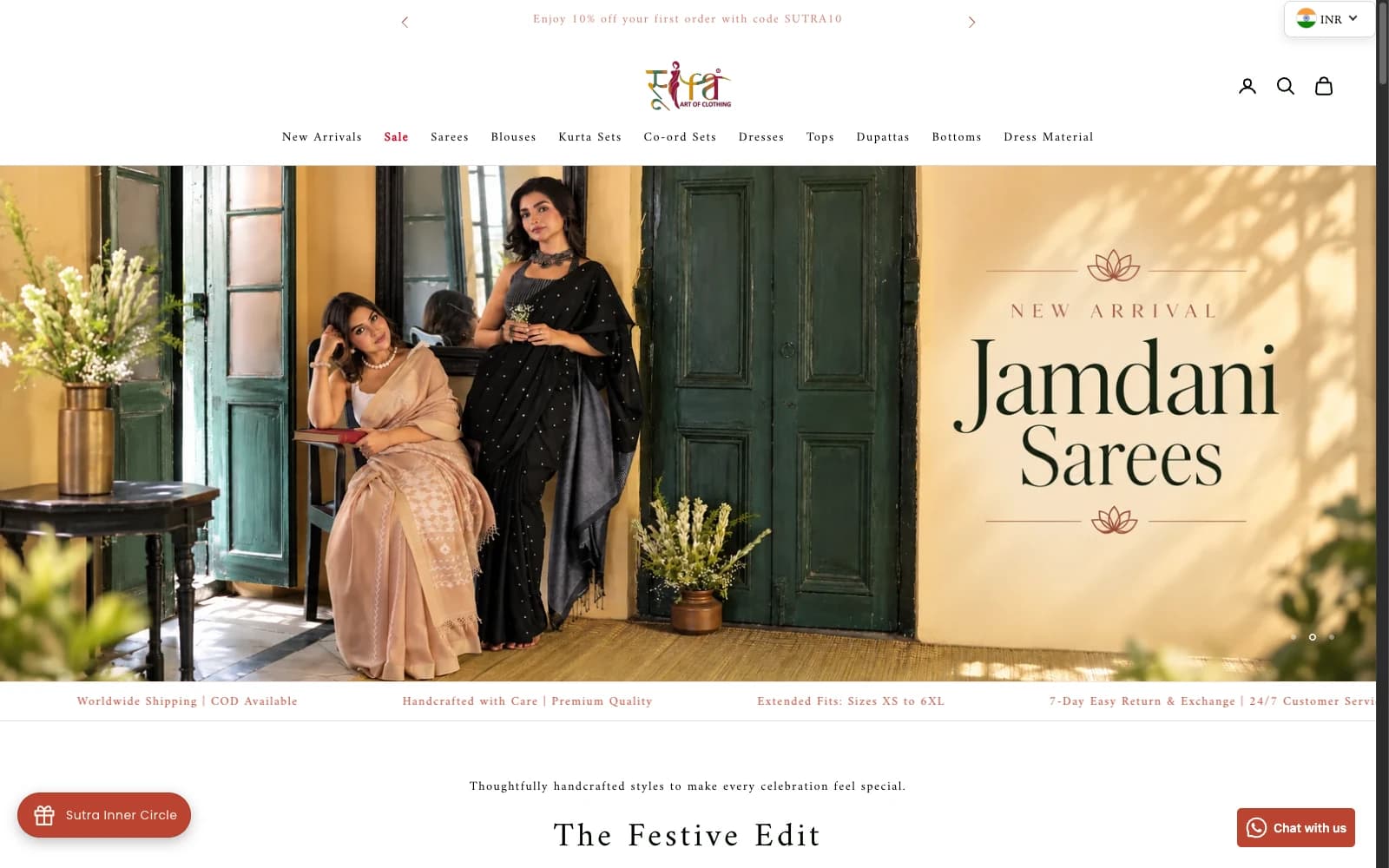
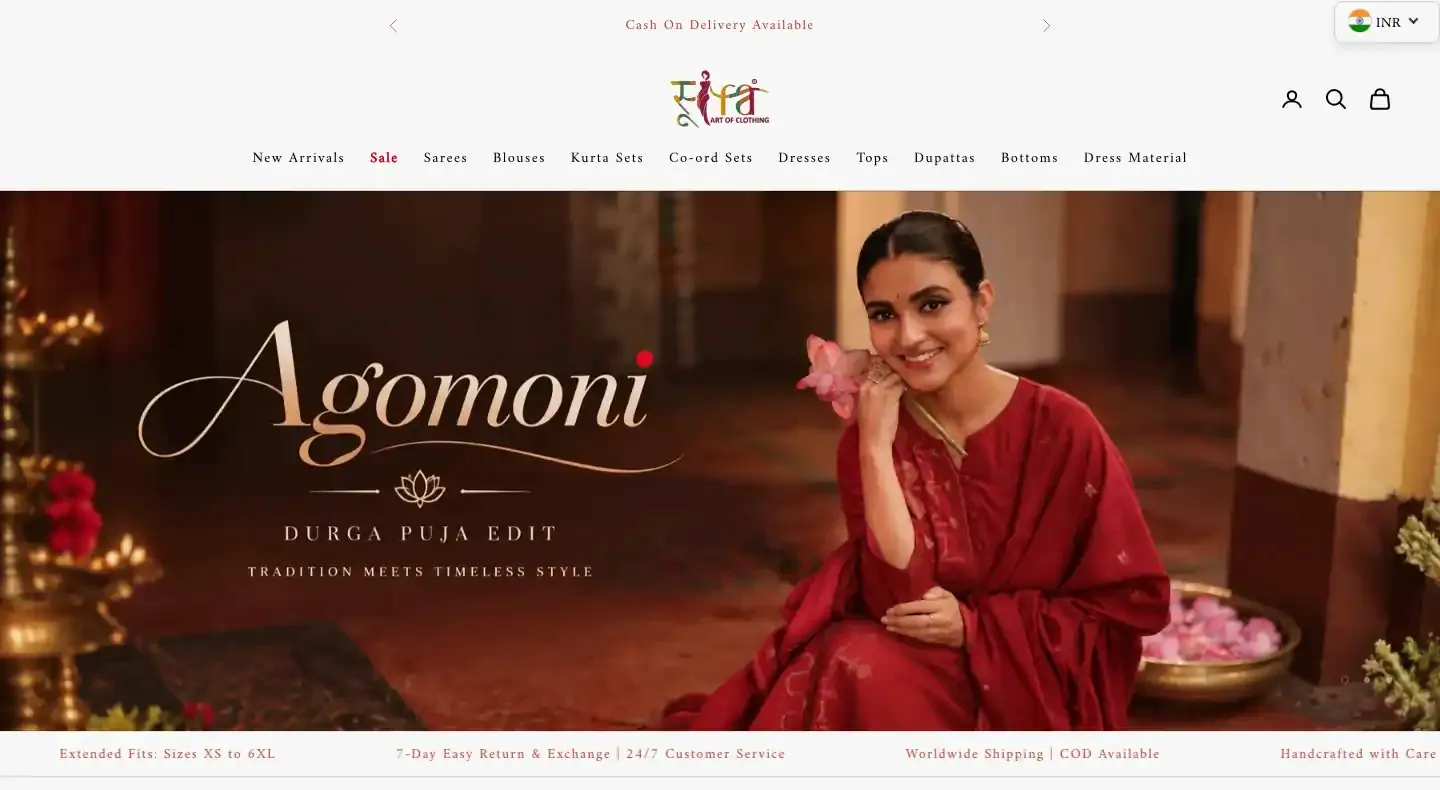
The top of the live store has a rotating announcement bar, a currency selector, a centered logo, and account, search and cart icons. The main menu runs across the page: New Arrivals, Sale, Sarees, Blouses, Kurta Sets, Co-ord Sets, Dresses, Tops, Dupattas, Bottoms and Dress Material.
The hero banner promotes a Durga Puja edit called Agomoni, with script lettering and the line Tradition Meets Timeless Style beside a model in a deep red outfit. Beneath it, a scrolling strip lists store policies such as extended sizing, returns and exchanges, shipping and cash on delivery, and a handcrafted message. Putting these service points directly under the hero answers common questions before a shopper starts browsing.
The typography and color palette lean on serif lettering, warm reds and soft neutrals, which suits traditional wear and keeps the focus on the clothing photography. The long menu stays on a single line at desktop width, so every garment category is one click away from the homepage.
04 / The project
Festive edits as entry points
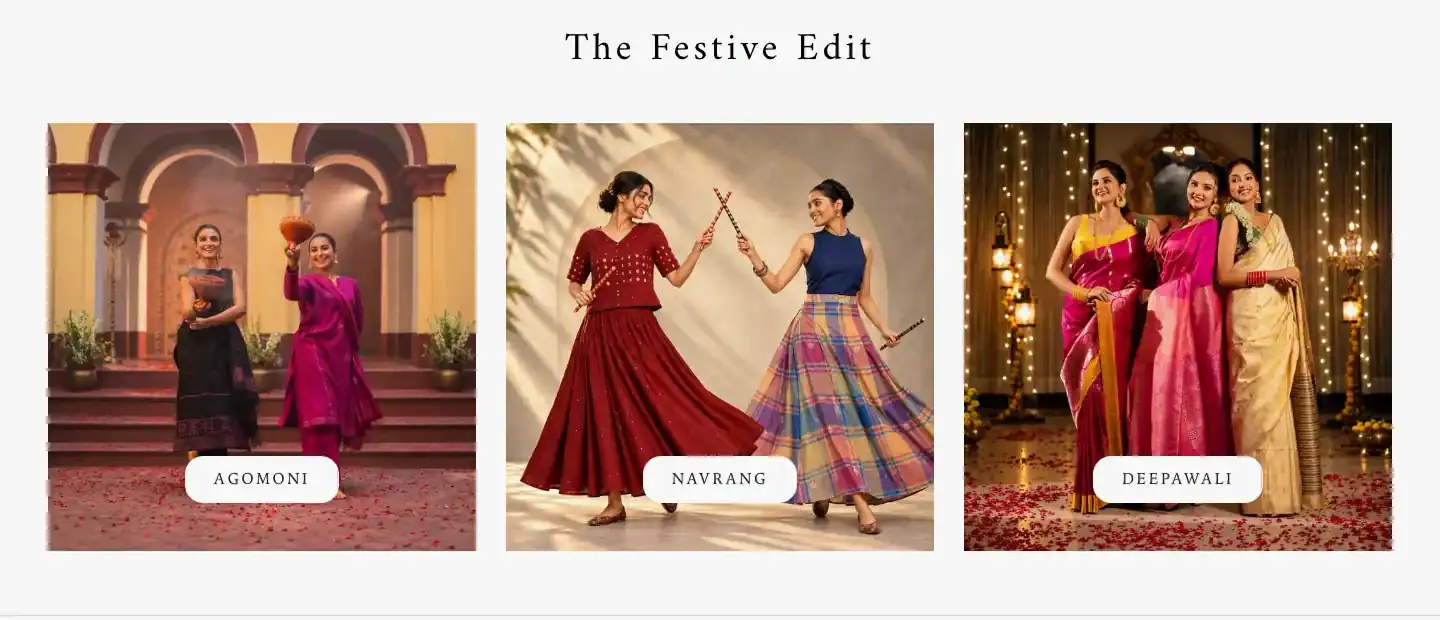
Below the hero, a section titled The Festive Edit shows three large image tiles labeled Agomoni, Navrang and Deepawali. Each tile uses styled photography of models in festive outfits, with the collection name on a pill-shaped label.
These tiles let shoppers start from an occasion rather than a garment type. Someone dressing for a specific festival can go straight to a curated set of outfits. The next section, Jamdani Sarees, begins directly underneath with a row of saree product cards, showing how the homepage moves from occasion-led edits into craft-led product rows.
Festive edits also give the store a natural way to refresh the homepage through the year. Each occasion can bring its own photography and product selection while the surrounding layout stays the same.
05 / The project
Telling the story of the craft
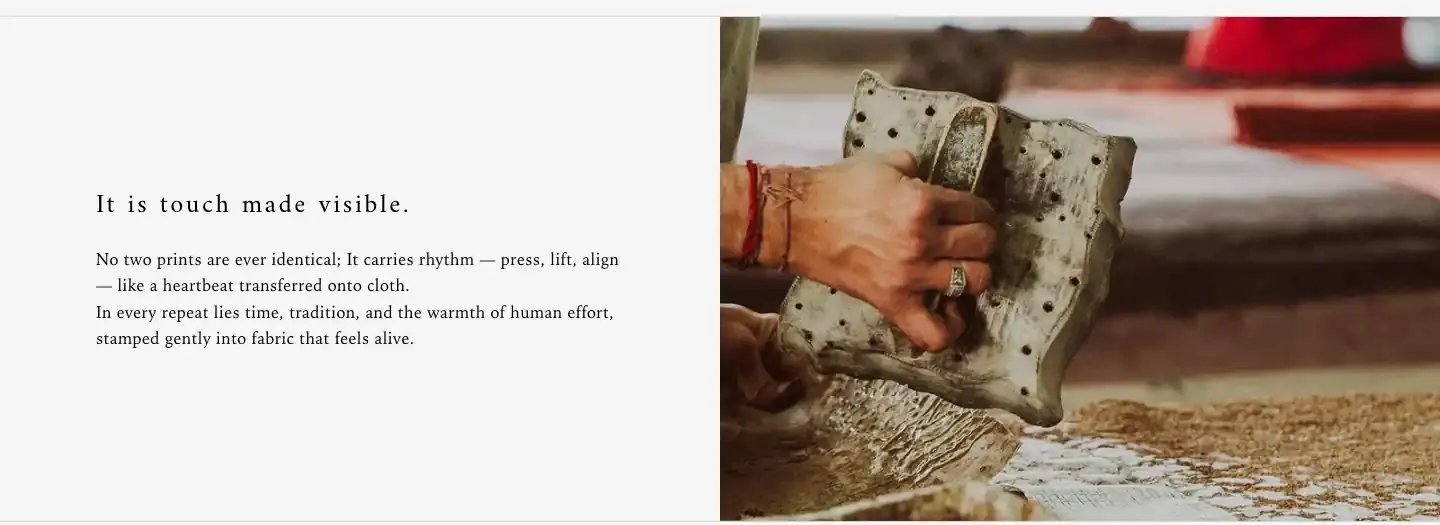
Between product rows, the live store includes editorial blocks. One of them, headed It is touch made visible, sits beside a close-up photo of hands pressing a carved wooden block onto fabric. The short text describes how no two block prints are identical and how each repeat carries time, tradition and human effort.
The homepage also includes a block on handloom weaving, The Beauty of Human Hands, earlier in the page. Sections like these explain why handmade pieces vary and give context for the product rows that follow, which matters for a store built around handlooms and traditional techniques.
The split layout, with text on one side and a full-height photo on the other, breaks up the rhythm of product grids and slows the page down at the right moments.
06 / The project
Product rows by technique
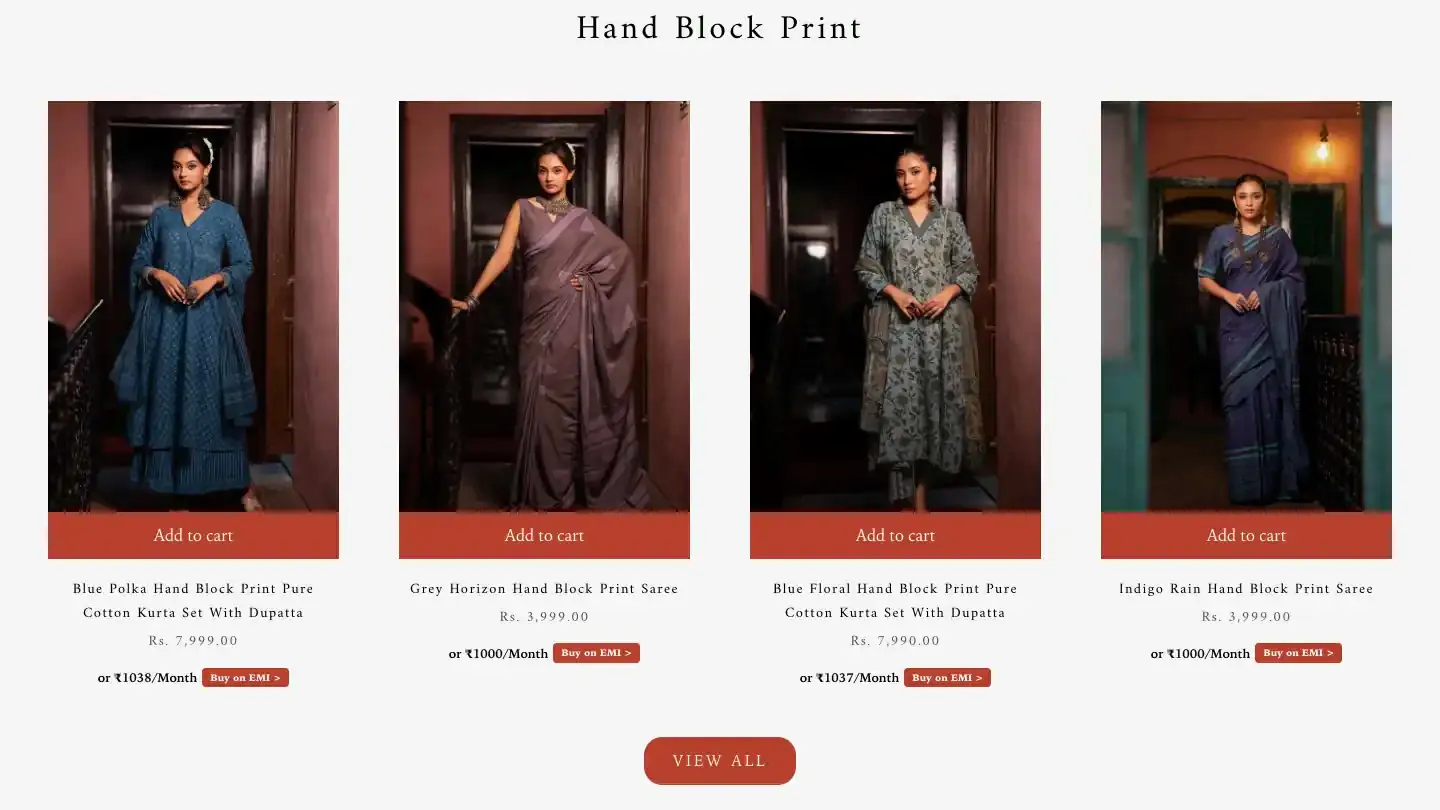
The Hand Block Print section is a four-column product row. Each card has a tall portrait photo of a model wearing the piece, a full-width Add to cart bar directly below the image, the product name, the price and a line offering an EMI payment option. A View All button below the row leads to the full collection.
The same card layout is used for Jamdani sarees, kurta sets and other rows on the homepage. Product names are descriptive and include the fabric and technique, for example cotton kurta sets with dupatta or hand block print sarees, which helps shoppers compare pieces without opening each one. Placing Add to cart directly under each photo keeps the purchase action close to the image a shopper is looking at.
Further down the page, the live store adds a customer reviews section, a row of service icons and a blog with articles on festive dressing and gifting.
07 / The project
Why Shopify suits a handloom clothing brand
A traditional wear catalog changes with the festival calendar. Shopify collections and theme sections let a store team swap the hero, rename a festive edit or add a new technique-led row without rebuilding pages. Variants handle sizes, and the platform's checkout and payment options cover the purchase step.
The live Sutra Clothing store uses that flexibility to combine seasonal campaigns, garment-type navigation and craft storytelling on a single homepage.
For brands planning a similar store, it helps to decide early which groupings matter most to customers, whether occasion, garment type or craft, and to prepare photography and short craft descriptions for each one before launch.
Technology used
Questions about this project
What did Ackrolix build for Sutra Clothing?
Ackrolix's portfolio lists a Shopify eCommerce store for Sutra Clothing's traditional wear and handloom products.
How is the live store organized?
The main menu groups products by garment type, the homepage features festive edits, and product rows are grouped by technique, such as Jamdani sarees and hand block prints.
How does the store present handloom craft?
Editorial blocks between product rows describe weaving and block printing, paired with close-up photos of the process.
Can Ackrolix build a similar Shopify store for an ethnic wear brand?
Yes. Ackrolix builds Shopify stores and can plan seasonal collections, garment-type navigation and product presentation for traditional clothing.
Prepared by Ackrolix Innovations from its development portfolio, pages 118. Project profile based on the documented service scope. About the team.